Getting your business online
The benefits of having a website for your small business
A good website does more than make your business look professional. It helps people find answers, feel confident and take the next step.
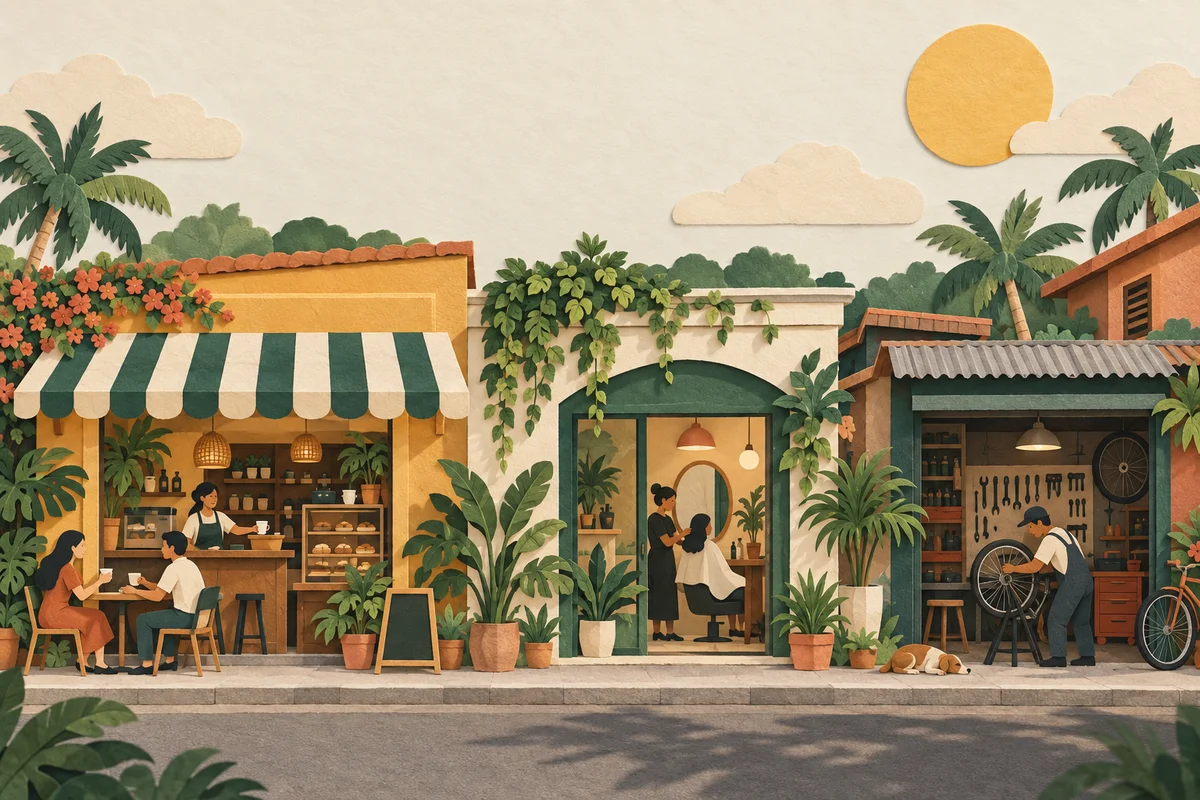
You might already get customers through referrals, Facebook or people walking past your shop. If those things are working, it’s reasonable to wonder whether a website would really add anything.
The useful question is not simply, “Should my business have a website?” It’s “What would make it easier for the next customer to choose us?”
For many small businesses, the answer is surprisingly simple: a clear place to see what you offer, find practical details and get in touch. That is where a well-made website can earn its place.
Help people find what you offer
Imagine someone searching for a nail salon in their area or a café for a weekend catch-up. They may not know your business name yet. They know the service they want and roughly where they want it.
A website gives you space to describe those services and your location clearly. Instead of relying on a single social profile or an old post, you can have useful pages that answer the questions a potential customer is asking.
Google’s SEO Starter Guide recommends creating helpful content and organising it so both people and search engines can understand it. There is no shortcut that guarantees first place, but clear information is a sensible foundation.
The same principle matters as people turn to AI tools for answers. Accurate, accessible information gives those tools something useful to understand; it does not guarantee that they will recommend your business.
Make a good first impression before you meet
A customer who has never visited needs a few reasons to feel comfortable. Your own photos, a clear description of your work and accurate contact details can help.
For a dental clinic, that might mean showing the space and explaining how to arrange a first visit. For a home service business, it might mean listing the jobs you handle, your coverage area and examples of completed work.
You don’t need to look like a large corporation. A warm, thoughtful website that feels like your actual business is often a better fit. The goal is to help people understand who they will be dealing with.
Answer everyday questions without another message
“Are you open on Sunday?” “Where are you located?” “Do you offer this service?” “How much does it start at?”
Those are good questions, but answering them individually takes time. Your website can keep the essentials together:
- Your services and what is included.
- Prices or an explanation of how to get a quote.
- Opening hours and the areas you serve.
- Photos that show your work or your space.
- A clear way to call, send a message or make an enquiry.
People can check those details even when you’re busy with a customer. It also means the enquiries you do receive can start with a little more understanding.

Make it easy for phone users to act
A website should feel comfortable on a small screen. Visitors shouldn’t need to zoom in to read your menu or hunt for your phone number.
Readable text, fast-loading images and a clear contact button all matter. Think about someone standing outside, comparing two options on their phone. The easier it is to understand your business, the easier it is to take the next step.
This is also why a beautiful desktop design alone isn’t enough. Your mobile experience deserves just as much attention.
Give your other marketing a useful destination
A website can support the things you already do. Link to your services from Facebook. Put your website address on your business card. Send a customer straight to a page that answers their question.
You don’t have to choose between a website and social media. They serve different purposes, and they can work together. Our guide to using a website alongside Facebook explains that relationship in more detail.
Organic discovery can bring people to your business without paying for each click, but it takes useful information, time and ongoing accuracy. A website creates an opportunity; it doesn’t replace good service or guarantee a steady flow of customers.
Keep the cost in proportion to your business
The benefits only make sense if the cost fits. A small local business often needs a focused website, rather than a large system full of features it won’t use.
At Luzon Digital, our ₱500/month website package includes a custom design, up to five pages, hosting and a .com domain. It is built for businesses that want to show their services and receive enquiries, with the technical setup handled for them.
Here’s a practical way to consider the cost: if one additional customer brings you ₱500 in profit, that would cover a month of the website. Use your actual profit after delivering the service—not just the amount of the sale—and remember that extra customers are never guaranteed.
Start with what your customers need
Before choosing colours or writing a headline, write down the five questions customers ask you most often. Then ask whether a stranger could easily find those answers today.
If the answer is no, that is a useful place to start. A good small business website doesn’t have to do everything. It needs to help the right people understand your business and make the next step feel easy.
Written by Luzon Digital
We make thoughtful, affordable websites for small businesses across the Philippines. Our guides help you make confident decisions about your business online.
Explore more small business guides